Books Like Catherine House: 8 Picks for the Fog Lovers
Elisabeth Thomas’s Catherine House is a novel that refuses to explain itself. A girl arrives at a mysterious Pennsylvania college. The college takes things from its students. Exactly what it takes, and why, and whether the bargain was worth it — the book hands you the pieces and leaves you to sit with them. Readers who wanted a thriller plot with a clean reveal were furious. Readers who wanted to feel like they were slowly sinking into cold water loved it.
On this list:


If you’re in the second camp, this list is for you.
These picks share Catherine House’s actual qualities: sealed-off institutions, prose that moves like fog, dread that builds without ever quite breaking, and endings that resist. Where a book is likely to frustrate plot-focused readers, I’ll say so upfront.
The Books
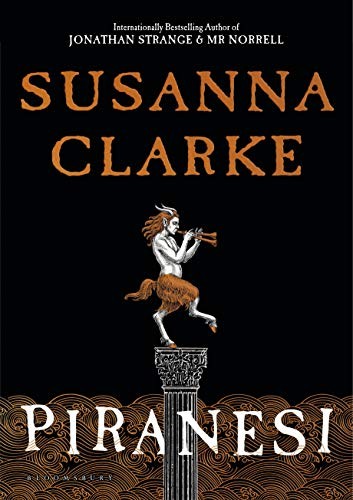
Piranesi — Susanna Clarke (2020)
The most obvious comp and the most earned one. A man lives alone in a House of infinite halls and statues and tides. He doesn’t know how he got there. The mystery slowly, gently surfaces. Clarke’s prose has the same unhurried quality as Thomas’s — you’re not being moved toward a revelation so much as inhabiting a world until it reveals itself to you.
Shorter than Catherine House, cleaner in structure, and — unusually for this list — actually satisfying on plot. Start here if you’re not sure how much atmosphere you can stomach.
Bunny — Mona Awad (2019)
Samantha Mackey is a scholarship student at a suffocatingly precious MFA program. The other girls call each other Bunny. Something is wrong with the Bunnies. Awad writes with a fever-dream logic that makes you feel like the institution is reshaping you as you read. It’s funnier than Catherine House and more grotesque, but the core feeling — a girl inside a strange closed world, losing her grip on who she is — is the same.
Full breakdown of books in the same vein here.
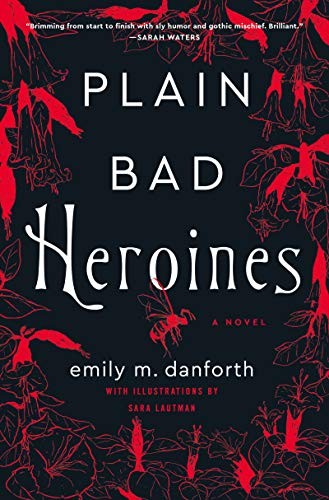
Plain Bad Heroines — Emily M. Danforth (2020)
Two timelines, one cursed boarding school, a century of bad luck and yellow jackets. Danforth is doing something more elaborate than Thomas — dual timelines, meta-fictional touches, a film crew arriving at the school — but the gothic-institution dread is identical. The book is long and proud of it. If you bounced off Catherine House’s pace, this will not help. If you loved it, this is a feast.
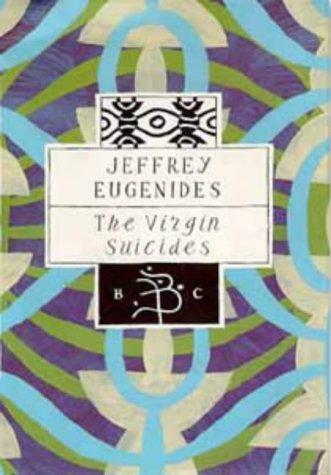
The Virgin Suicides — Jeffrey Eugenides (1993)
Five sisters. A suburb sealed off from the world. Narrators who observe from outside and never quite understand. Eugenides is working in a different register from Thomas — suburban gothic rather than institutional — but the effect is nearly identical: a beautiful thing with something rotting at the center, told in prose that keeps its distance exactly when you want it to close in.
One of the foundational texts behind the whole aesthetic. It’s on the dark academia classics shelf for that reason.
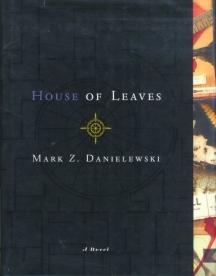
House of Leaves — Mark Z. Danielewski (2000)
The extreme version of the sealed-space-that-wants-to-eat-you premise. A house that is larger on the inside than the outside. Academic apparatus that may be fabricated. Footnotes that spiral into their own narrative. If Catherine House’s ambiguity felt like a tease, this book turns ambiguity into an architectural feature.
Not slow — destabilizing in an entirely different direction. Anxiety rather than fog. Plot-first readers will still struggle because the plot is buried under three layers of unreliable frame narration.
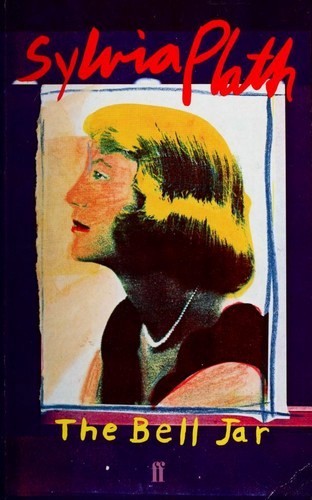
The Bell Jar — Sylvia Plath (1963)
Esther Greenwood’s slow dissolution inside an institution that means to help her. The institution is a psychiatric facility, not a college, but the dynamic is the same as Catherine House: a young woman surrounded by a world that has its own logic for her, which she can resist or not. Plath’s prose is perfectly controlled. The dread is bone-level.
If you haven’t read this yet and you’re reading atmospheric gothic fiction about girls inside sealed institutions — go fix that.
Vera — Elizabeth von Arnim (1921)
Lucy marries a man too quickly after her father’s death, moves into his house, and slowly discovers the shape of his first marriage — a woman named Vera who seems to have been absorbed by the place. Von Arnim is doing the same thing Thomas does: showing a woman inside a structure that has expectations for her, through prose that is perfectly pleasant until you notice it isn’t.
A hundred years old and still unsettling. It predates the dark academia label by a century but belongs to the same tradition. More of these over on the dark academia classics post.
If We Were Villains — M.L. Rio (2017)
Seven Shakespeare students at a conservatory. One of them is dead. Rio’s book has more plot than Catherine House — it’s structured as a confession, so you know from the start that something terrible happened — but the texture is the same: a closed world with its own rules, beautiful and suffocating in equal measure, students performing versions of themselves until they can’t stop.
One honest note for plot readers
If you picked up Catherine House for a mystery and finished it annoyed — that’s fair, and most of this list won’t fix it. Piranesi is your best bet: it has the same sealed-world atmosphere but delivers on its central question. If We Were Villains has a proper plot engine underneath the gothic texture.
The rest are for readers who don’t need the mechanism explained. For whom the institution feeling wrong is enough — who can sit inside the dread without needing the novel to justify it. Catherine House sorts for that reader on purpose. If it sorted for you, you’re in the right place.