Dark Academia Standalones: No Sequel Required

There is a specific betrayal: you finish a dark academia novel at 2am, wrecked, and open the back matter to find “Book One of the [Something] Trilogy.” That feeling — part admiration, part fury — is why this list exists.
On this list:
These are dark academia standalone books. Complete arguments. Stories that end because the author decided to end them, not because a publisher scheduled a sequel. Some are recent, some are decades old. All of them let you sleep.
I’ve also flagged a few series whose first books function as standalones — because occasionally a duology opener is honest about it.
The True Standalones
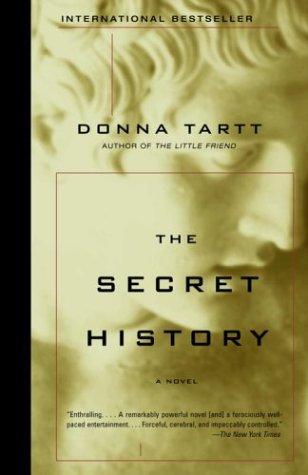
The Secret History — Donna Tartt (1992)
Still the origin point. The murder is on the first page, so the tension is never will someone die but how did these people become capable of it. Tartt takes 559 pages to answer that, and she sticks the landing. Nothing left unresolved. Nothing waiting for a sequel. She didn’t write one for eleven years, and when she returned it was a completely different book.
If you’ve already read it, Books Like The Secret History has the closest alternatives, ranked by how much they actually overlap.
If We Were Villains — M.L. Rio (2017)
Seven Shakespeare students, one dead body, ten years of silence. The frame narrative — Oliver, newly released from prison, finally telling the truth — closes in a way that’s genuinely satisfying rather than strategically ambiguous. Rio has said publicly she has no plans for a sequel. Believe her.
The Picture of Dorian Gray — Oscar Wilde (1890)
Technically a Gothic novel. Functionally the ancestor of every dark academia story about beauty, obsession, and the cost of being interesting. The ending is not soft. If you want the full argument for why this qualifies as part of the canon, Is Dorian Gray Dark Academia? makes it properly.
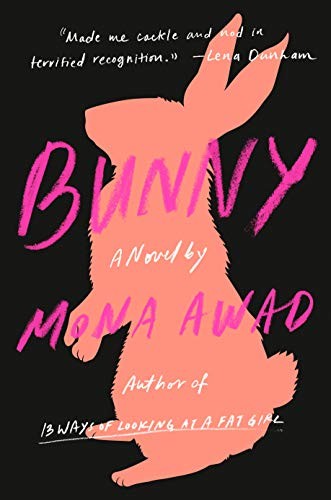
Bunny — Mona Awad (2019)
A creative writing MFA cohort. Ritualistic violence. A protagonist (Samantha) who wants desperately to belong to the group she despises. Awad writes horror and comedy at the same register simultaneously, which shouldn’t work but does. The ending is deliberately unmoored — some readers hate this — but it’s complete unmoored, not sequel-baiting unmoored. Books Like Bunny if you want more of this specific fever pitch.
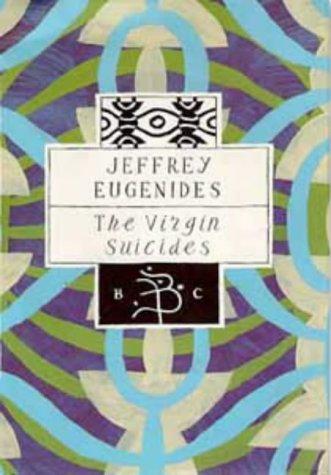
The Virgin Suicides — Jeffrey Eugenides (1993)
Five sisters, a suburb that can’t stop watching them, a collective narrator reconstructing something they were never close enough to understand. The tone is elegiac from sentence one. Eugenides isn’t withholding resolution to generate a second book — he’s making the point that some things don’t resolve. There’s a difference.
Possession — A.S. Byatt (1990)
Two contemporary literary scholars, two Victorian poets, and an archive of letters that shouldn’t exist. Byatt won the Booker for this and it’s not hard to see why: she invented full fictional poems and correspondence for the Victorian characters, then built a mystery around them. Long, brainy, and complete.
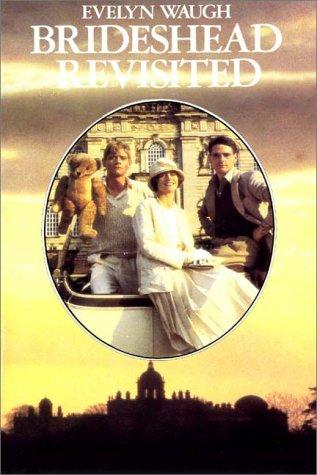
Brideshead Revisited — Evelyn Waugh (1945)
An Oxford friendship, Catholicism, class, and the peculiar sadness of realizing you were happy after you’ve left. Brideshead Revisited as dark academia is worth reading if this one surprises you — because it will, and not how you expect.
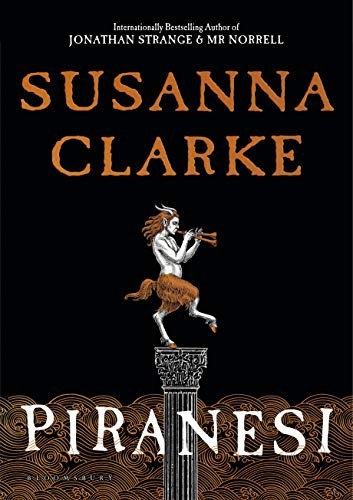
Piranesi — Susanna Clarke (2020)
A house that contains the world. A man who doesn’t know how he got there. A mystery that resolves on the page, not in a sequel. Clarke has said she had no interest in returning to the setting. Short (272 pages), completely sealed, one of the stranger reading experiences of the last decade.
The Magus — John Fowles (1965, revised 1977)
A young English teacher on a Greek island. An old man who may be running an elaborate psychological game, or may be something worse. Fowles revised the ending once because readers complained they didn’t understand it. The revised ending is only marginally more explained. He is not going to help you. That’s the point, and it’s one book.
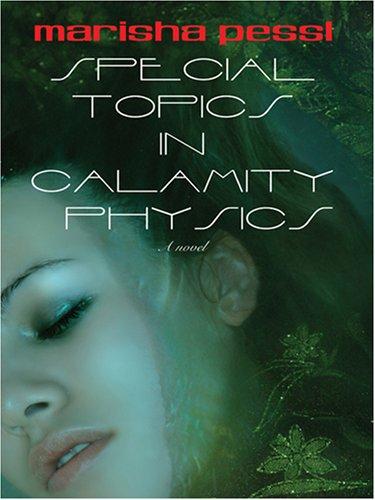
Special Topics in Calamity Physics — Marisha Pessl (2006)
A precocious narrator, a charismatic teacher who may have been murdered, and a structure organized as a course syllabus with a final exam. The mystery actually resolves. Pessl wrote a second novel (Night Film, 2013) that shares zero characters or setting — so this is a standalone in every practical sense.
Series Entries That Work Read Alone
A few notes on this, because the category is real.
The Atlas Six — Olivie Blake: The first book ends on a cliff. This is a controversial opinion but I’d call it a soft cliff — the central question (which five of six survive initiation?) is answered. Whether the answer satisfied you determines whether you need book two. Books Like The Atlas Six has alternatives if you want to skip the series commitment.
A Deadly Education — Naomi Novik: Does not function as a standalone. The ending is a setup. I’m including it here specifically to warn you. If you’re series-averse, start with the books like A Deadly Education post and find a single-volume substitute.
Ninth House — Leigh Bardugo: The murder mystery at the center of book one resolves. The broader world-building gestures toward sequels. Whether that bothers you depends on your tolerance for unanswered mythology questions — the crime itself closes.
One Pattern Worth Noting
The best standalones in this genre tend to be about the past. Someone narrates backward — Oliver in prison, the neighborhood boys in The Virgin Suicides, Roland in Possession reading dead letters. The retrospective frame signals: this story has already ended. We are just learning what happened.
The worst cliffhangers tend to be present-tense, fast-chapter, momentum-dependent books where the author needs you to buy the next one to feel the ending. You know the type before you’re told. The prose accelerates instead of deepens. The chapters end mid-scene.
Neither is inherently wrong. But if you’re burned out on the second kind, the books above are built differently. They cost something to write, and they end.