Books Like Ninth House: Occult Campuses, Ranked

Leigh Bardugo’s Ninth House does something most magical-campus books won’t: it makes the institution the villain. Yale’s secret societies aren’t charming eccentrics who happen to do blood magic — they’re a machine for protecting wealthy people from consequences, and the magic is just how that machine runs. Galaxy Stern is there on a scholarship, on sufferance, and the book never lets her forget it.
On this list:

That’s the thing to hold onto when looking for similar reads. A lot of books will give you occult ritual, Latin, and Gothic architecture. Fewer will put institutional power under the same lens. This list is ranked by how seriously each book treats that second element — the rot inside the building, not just the candlelight on its walls.
The closest fits first
1. If We Were Villains — M.L. Rio
A Shakespeare conservatory, seven students playing the same roles until someone dies in one. The institution here is a hothouse: small, airless, run by a teacher who shapes his students into weapons and calls it education. The magic is Shakespeare — the way the plays colonize how these people think and speak until they can’t separate themselves from their characters.
If Ninth House is about class and who the institution protects, Villains is about formation and who the institution consumes. Both end badly for the scholarship kid. My deeper notes on what to read after If We Were Villains are worth a look once you’ve finished it.
2. The Secret History — Donna Tartt
If you’ve somehow arrived here without reading it: Greek students at a small Vermont college reconstruct an ancient bacchanal, kill someone, and spend the rest of the novel trying to live with that. The institution matters here as a place that encourages students to believe they exist outside ordinary moral rules. Julian Morrow, the professor, is one of literature’s great enablers — he creates the conditions and then steps back.
Less explicitly supernatural than Ninth House but shares the same core conviction: elite institutions attract people who want permission to do terrible things, and often provide it. Books like The Secret History ranked by closeness, if you want to go deeper into that orbit.
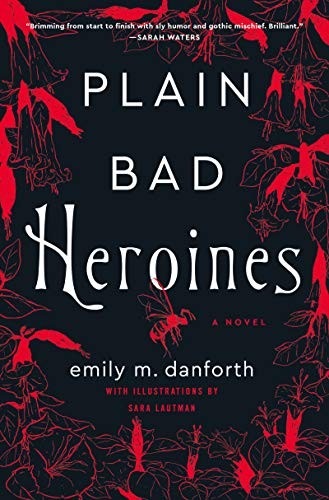
3. Plain Bad Heroines — Emily M. Danforth
Two timelines, one cursed school. In 1902, a girls’ school in Rhode Island develops a cult around a daring writer, wasps start killing students, and things go wrong in period-accurate ways. In the present, a horror film is being shot at the same location. The dual-timeline structure sounds mechanical but works — the 1902 sections are genuinely unsettling in a way the present-day ones earn against.
What raises this above “spooky campus story”: the book is interested in how institutions erase women who don’t fit, and how the archive — what gets preserved, what gets forgotten — is itself a form of violence. Treats its queerness with the same seriousness as its horror.
4. A Master of Djinn — P. Djèlí Clark
Cairo, 1912, a Ministry of Alchemy, Enchantments and Supernatural Entities. Magic is real, colonialism is real, and the ministry is a colonial institution with a supernatural remit — which creates frictions the book is genuinely interested in. Fatma el-Sha’arawi is an agent investigating a massacre at a Sufi brotherhood meeting.
Less campus than the others, but shares Ninth House’s commitment to asking who the institution serves. The magic isn’t decorative; it’s embedded in power structures. Closer to procedural than Gothic, which is either a feature or a bug depending on your mood.
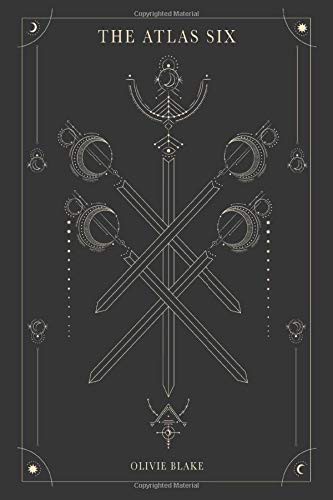
5. The Atlas Six — Olivie Blake
Six magicians compete for five spots in a secret society that controls the world’s knowledge. Very explicitly about scarcity and what people will do when made to compete for one fewer seat than there are candidates. The institution is a machine for selecting people willing to compromise themselves.
Honest caveat: the prose is uneven and the character differentiation requires patience. But it’s asking the right questions — about merit, about selection, about what “the best” means when the judges are people who already have everything. Closer to Ninth House in ambition than in execution, but the ambition is real. The sequels improve.
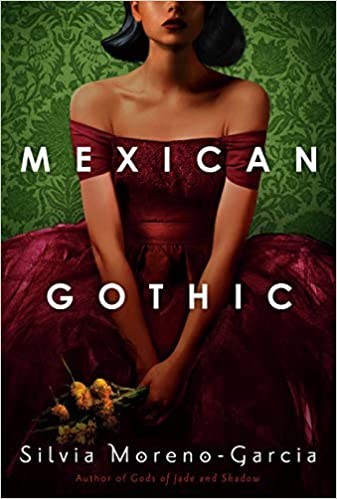
6. Mexican Gothic — Silvia Moreno-Garcia
1950s Mexico, a crumbling English family estate in the highlands, a cousin who sends a disturbing letter. Noemí Taboada goes to investigate and finds something very wrong with the house and the family inside it.
Pure Gothic rather than academic, but it belongs here because the rot is structural — the house is literally the institution, a colonial project that fed on Indigenous labor and won’t stop. The supernatural element is the form the exploitation takes once it has calcified. If Ninth House feels too campus-bound and you want the same ideas in a different setting, this is the move.
7. Babel — R.F. Kuang
Oxford, 1830s, a translation institute that powers the British Empire through silver-working magic. The empire runs on stolen language, on scholars extracted from their home cultures and made to serve the machine that colonized them. Robin Swift knows what he’s participating in and does it anyway, for a while.
The most explicitly political book on this list. Less supernatural dread, more structural horror — which is its own kind of dread once the book earns it. For readers who want Ninth House’s institutional critique amplified and the magic made into a literal metaphor for extraction. More picks for the institution-skeptics in the Babel thread.
Magic school, lighter on rot
These are good books doing something different — closer to the fun end of the occult-campus spectrum, which is a legitimate place to be.
Piranesi (Susanna Clarke) — not a campus novel, but a book about being trapped inside an impossible building you’ve learned to love. If Ninth House left you wanting the architectural uncanny without the social critique.
Jonathan Strange & Mr Norrell — long, English, institutional, about two magicians who are themselves a kind of institution. The rot is gentler and the prose is the point.
The Magicians (Lev Grossman) — what it looks like when talented people are given exactly what they think they want. The disillusionment is real. Less interested in class than Ninth House; more interested in depression wearing a fantasy costume.
The pattern across the best picks: the supernatural isn’t the threat. The supernatural is how the existing threat — the university, the estate, the empire — makes itself legible. Galaxy Stern would recognize the logic immediately. The building was already dangerous before anyone drew a circle on the floor.