Dark Academia Horror: 8 Books That Cross the Line
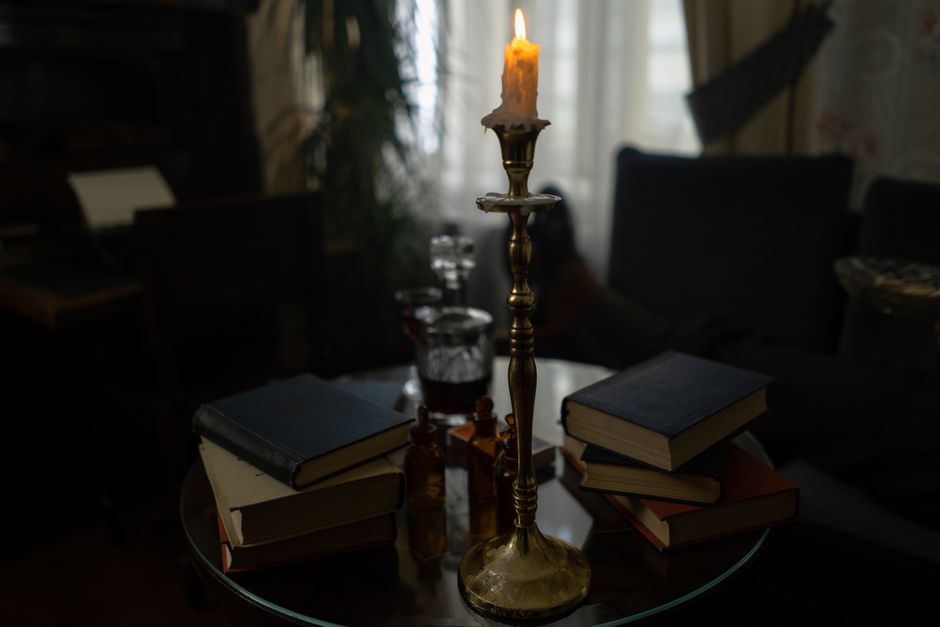
Dark academia is already a genre built on dread — the fall from grace, the mentor who wants too much, the secret that corrodes a friendship. Most of it stays in the register of doom: beautiful, sad, a little thrilling. But some books cross a harder line. The air pressure changes. The dread stops being aesthetic and starts being actual fear.
On this list:
These eight are the ones that made that crossing. Each gets a dread rating (on a scale of ominous to actively disturbing) and real content notes, because nothing breaks a reading spell like an unexpected chapter you were not equipped to handle.
The Tropes That Tip It Into Horror
Standard dark academia gives you: an elite institution, a charismatic corruptor, a crime, a reckoning. Horror dark academia keeps all of that and adds at least one of: the supernatural operating without explanation, violence that is visceral rather than stylized, psychological dissolution so complete that the narrator becomes unreliable in a genuinely frightening way, or an ending where no one gets out.
Keep that framework in mind.
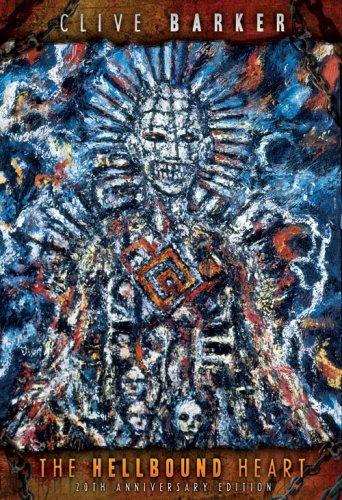
1. The Hellbound Heart — Clive Barker (1986)
Dread rating: Full horror. No hedging.
The academic framing is thin but real: a man who has read and solved every puzzle, consumed every pleasure, decides the next frontier is deliberate agony. The Cenobites are the faculty he earned. Barker’s prose is precise in a way that makes the imagery worse — he describes transformation the way a biology lecturer describes dissection.
This is horror first. The dark academia elements (obsessive scholarship, forbidden knowledge, a bargain you can’t undo) are the skeleton underneath. It’s short — 150 pages — and will rearrange your sense of what a novella can do to you.
Content notes: Extreme body horror, sexual violence, graphic gore.
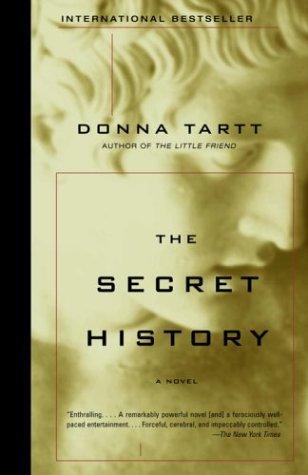
2. The Secret History — Donna Tartt (1992)
Dread rating: Slow-burn dread with one hard jolt.
I know — you’ve read it, or been told to read it as an entry point to the genre. It’s here because it’s worth being honest: there is a scene of actual horror in this novel, not gothic atmosphere, and most discourse around it gets coy. The Bacchanal sequence is reported after the fact, but Tartt doesn’t spare you. Most retellings of the plot quietly elide what Henry and the others did. It earned its reputation.
Content notes: A death depicted in matter-of-fact detail; the Bacchanal sequence includes dissociation and implied violence to a stranger that the novel doesn’t treat as morally uncomplicated, whatever the characters tell themselves.
If you haven’t started here yet, the full argument for why it’s the foundation of the genre is worth reading before you encounter the discourse.
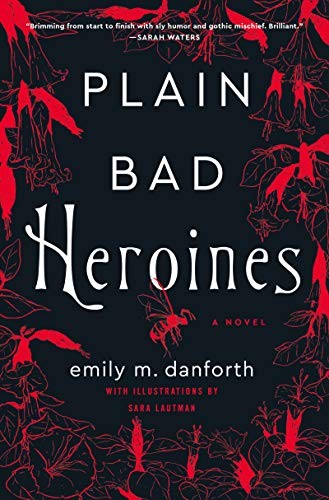
3. Plain Bad Heroines — Emily M. Danforth (2020)
Dread rating: Creeping, then sudden.
Dual timeline: a cursed New England girls’ school in the early 1900s, and a film adaptation of that history being shot in the present. The horror arrives through wasps — which sounds absurd and is, genuinely, terrifying. Danforth earns the supernatural by building the mundane for 200 pages first. The illustrations by Sara Lautman, placed throughout, do something the text alone can’t.
The lesbian gothic register here is more knowing than most entries in that tradition; the book is aware of its own tropes and chooses them deliberately. Which makes the moments where it stops being knowing and becomes sincerely frightening hit harder.
Content notes: Deaths of young women, body horror (insects), period-accurate homophobia, one scene of graphic injury.
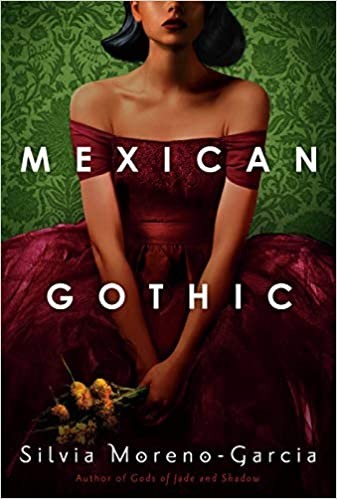
4. Mexican Gothic — Silvia Moreno-Garcia (2020)
Dread rating: Full horror with academic precision.
Eugenia Montoya Doyle goes to a crumbling estate in rural Mexico to rescue her cousin and encounters a eugenicist patriarch, a house that is literally breathing, and a history of forced medical experimentation on indigenous workers. The gothic-academic DNA is in the antagonist: a man so confident in his intellectual framework that he has used it to commit generations of atrocity.
The house is not metaphorical. The horror is biological. The ending is satisfying in a way that real horror often isn’t, which makes some readers argue it’s not quite horror. They’re wrong. The horror is in the middle third.
Content notes: Eugenics, medical experimentation, racial violence, body horror, sexual coercion.
5. If We Were Villains — M. L. Rio (2017)
Dread rating: Theatrical dread that earns one true horror note.
A Shakespeare conservatory, seven students, one death. Rio’s novel sits closer to the thriller end of the spectrum — the what-to-read-after post covers the adjacent titles — but there is one late scene, reported with Rio’s characteristic theatrical remove, that tips into something uglier than the rest of the book prepares you for. It concerns what happened during the production, not after it.
The horror here is human rather than supernatural. That’s sometimes worse.
Content notes: Drowning, substance abuse depicted without judgment, psychological coercion within a close group.
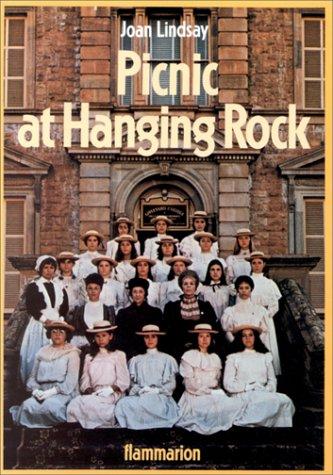
6. Picnic at Hanging Rock — Joan Lindsay (1967)
Dread rating: Existential dread. The horror is the absence.
Three girls and a teacher walk into the Australian bush on Valentine’s Day, 1900, and don’t come back. No explanation is given. No explanation exists. The novel presents this as reported fact in a matter-of-fact Victorian institutional voice, which is exactly what makes it unbearable.
The academic setting — a girls’ finishing school with rigid hierarchies and a headmistress who cannot afford a scandal — makes the disappearances worse by showing how the institution processes the inexplicable. It bureaucratizes terror. The feeling this book leaves is not melancholy; it’s a specific wrongness that doesn’t resolve.
Content notes: Disappearances of minors, one death by suicide, institutional cruelty.
7. House of Leaves — Mark Z. Danielewski (2000)
Dread rating: Architectural horror with academic scaffolding.
A blind man writes a critical study of a documentary film that doesn’t exist. The documentary is about a house whose interior is larger than its exterior. The novel is formatted as an academic text — footnotes, appendices, competing editorial voices, citation layers — which is not a gimmick. The apparatus is how the horror spreads. You cannot trust the narrator, the editor, or the house.
This is the entry on the list most likely to produce genuine sleep disruption. It is also seriously interested in academic knowledge-making as a process and what happens when that process encounters something that refuses classification.
Content notes: Extreme claustrophobic horror, psychological breakdown, relationship violence in appendix sections, one death.
8. The Virgin Suicides — Jeffrey Eugenides (1993)
Dread rating: Ambient dread. All horror, no supernatural.
Five sisters, one year, all dead. The narrator is a collective — neighborhood boys, now men, trying to understand from thirty years’ distance. They have assembled evidence, interviewed witnesses, catalogued artifacts. They still don’t know. The book is an autopsy of itself.
No institution except the family; no forbidden knowledge except whatever it was the Lisbon girls knew that the boys couldn’t access. Eugenides refuses to give you an explanation because he’s making an argument that the desire for one is the problem.
Content notes: Suicide (multiple), institutional failure to help adolescents, sexual grooming by an adult character.
One Line on Each Side
The books in this genre that stay on the doom side — the Halloween-ranked list covers those — tend to use death as a consequence of transgression. The books above use death as something that precedes understanding, or survives it, or doesn’t need it.
If you want the moody-but-not-frightening version first, start with the beginner’s list. If you already know you want it dark: Plain Bad Heroines for the controlled entry, House of Leaves when you’re ready to lose a night of sleep over a building.