Queer Dark Academia: The Canon Was Never Straight

On this list:
The argument first
Dark academia’s signature situation: two people become too close inside an institution built to keep them apart. Something is forbidden — a text, a ritual, a person. The transgression is intellectual and erotic at once, usually indistinguishable. Someone ends up dead or ruined or transformed in ways the institution calls monstrous.
That structure is queer. It was queer before the word existed in its current sense and it has been queer every time a canonical text in this genre has been written well.
The books below don’t sprinkle queerness on top of dark academia for contemporary relevance. They demonstrate that the genre’s emotional core — the dangerous love between people the world categorizes as “the same” — was always outside heterosexual convention. The timeline runs from Wilde to the present, and it’s a straight line only in the ironic sense.
The ancestral texts
The Picture of Dorian Gray — Oscar Wilde (1890)
Every argument about whether Dorian Gray is dark academia reaches the same place: yes, obviously, because Basil and Henry are doing the thing dark academia always does. They pour aesthetic obsession into a beautiful young man and take turns shaping him toward ruin. The love is never spoken cleanly. It doesn’t need to be. The portrait is what happens when a desire that can’t be named outlives the person who held it.
Wilde wrote this from inside a society that would imprison him for the desire running through every page. That’s not a biographical footnote — it’s why the novel’s tension works.
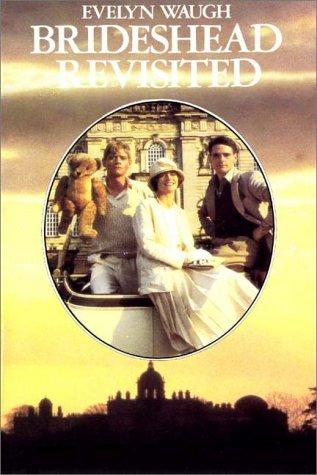
Brideshead Revisited — Evelyn Waugh (1945)
Charles Ryder arrives at Oxford and falls into Sebastian Flyte’s orbit. The novel is told with such careful retrospective grief that Waugh gets away with what he’s doing — a love story between two men filtered through the conventions of “friendship” that both of them partly believe and partly don’t. The institution (Oxford, then Catholic society) applies slow pressure until Sebastian is ruined and Charles is merely diminished.
A novel about being haunted by the person you loved before the world explained to you that you couldn’t. The dark academia classics post has more on this lineage.
What The Secret History actually is
Donna Tartt’s 1992 novel is the founding text of modern dark academia, and the relationship at its core is never quite heterosexual. Francis is explicitly gay; the twins carry an incestuous charge the novel acknowledges and refuses to resolve; Richard’s attachment to Henry reads as desire at almost every turn.
The group’s dynamic only makes sense if you read the attraction as something that can’t be put into conventional categories. They don’t fit outside the group, which is why they keep each other and why they kill to protect what they have. Queerness here isn’t content. It’s the engine.
The modern canon, argued
If We Were Villains — M.L. Rio (2017)
Seven Shakespeare students at a conservatory. One death. The novel is narrated from prison a decade later, which tells you immediately that something survived the institution’s attempt to contain it.
The relationships are queer in a way Rio doesn’t belabor: Oliver, James, Richard, Meredith, Alexander, Wren, and Filippa move between each other with the specific intimacy of people who have practiced embodying other people professionally since adolescence. The desire is everywhere and classified as nothing. One of the best-constructed novels in the genre. What to read after If We Were Villains has the obvious next step.
A Lesson in Vengeance — Victoria Lee (2021)
The novel to hand someone who wants queer dark academia and wants it to actually be dark academia.
Felicity Morrow returns to Dalloway School a year after her girlfriend died there. She befriends Ellis Haley, a novelist researching the school’s history of dead witches. The two begin recreating the rituals that preceded those deaths. The attraction between them is the mechanism of the horror — not incidentally queer, but structured so that the desire and the danger are the same thing.
Lee understands the genre’s inheritance from Wilde and Tartt and writes inside it rather than against it. The gothic architecture, the elite school, the obsessive research, the deaths — all of it serves a story about two women who want each other in ways neither can say cleanly. This is the one.
This Is How You Lose the Time War — Amal El-Mohtar & Max Gladstone (2019)
Not set in an academy. Still doing exactly what dark academia does: two adversaries inside a vast indifferent structure fall into obsessive correspondence, each letter a transgression, the relationship building toward mutual destruction or mutual escape. The emotional architecture is identical to the genre’s. Explicitly queer, and the best prose of anything on this list.
These Violent Delights — Chloe Gong (2020)
Shanghai, 1926, rival gangs descended from the Montagues and Capulets. The scholarship is there — obsessive research into a spreading madness, library scenes, the sense that knowledge is both weapon and poison. It earns its place here on craft and on the specific dread of loving someone you’re supposed to be at war with.
The anxious discourse has it backwards
The conversation about whether dark academia has been “queered” in recent years gets the history wrong. The genre was built from texts that encoded queer desire because straight desire didn’t need to encode itself. Forbidden love between people the institution said were equivalent — same sex, same class, same curriculum — was the only love the form could hold without going conventional.
When it went conventional, it became something else: a romance novel with better aesthetics.
The books that work in this genre work because they keep the transgression structurally necessary. The queer texts do this most honestly, because for them the transgression is real. Henry and Richard. Oliver and James. Felicity and Ellis. Basil and Dorian.
The list is long and it runs all the way back. Start there.
If you’re reading your way through the genre for the first time, the dark academia reading list has a sequenced order. For the horror end, dark academia horror goes further into the dread.